
Logistics
Logistics AI Solutions That Survive Contact With the Depot
Logistics AI solutions that help carriers, brokers and shippers forecast demand, cut empty miles, and handle exceptions before a customer calls to ask where their freight is.
01 Challenges
Where Logistics AI Solutions Get Hard
Logistics operators struggle with inaccurate forecasts, costly empty miles, late exception detection, and fragmented data across systems that fail to reconcile.
Shipment Status Nobody Can Confirm
Manual Exception Handling
Forecasts That Miss the Peak
Empty Miles and Deadhead
Documents Arriving as Scans
Carrier and TMS Data Mismatch
Customer Updates by Phone
Rates Quoted on Gut Feel
02 Solutions
Logistics AI Solutions We Deliver
We build logistics systems for forecasting, route optimisation, exception alerts, document automation, and dashboards grounded in your own network and shipment history.

Volume and capacity forecasts fitted on your own lane history, with seasonality and known events modelled rather than averaged away.
Get StartedNetwork-level planning that reduces empty miles under the constraints your planners actually work with, not an idealised version of them.
Get StartedDelays, damages, and shortfalls detected against expected behaviour as they happen, routed with the context needed to resolve in one touch.
Get StartedBills of lading, proofs of delivery, and customs documents captured from scans and mapped to your data model with confidence scoring.
Get StartedA grounded assistant answering status questions from the same shipment view your team uses, for customers and for service agents.
Get StartedQuotes scored against your own historic cost and win data, with the drivers shown so a planner can override with a reason.
Get StartedSlotting and shift planning fitted to your actual pick profiles and throughput, refreshed as the profile changes.
Get StartedOn-time, damage, and cost performance measured consistently across carriers, so procurement conversations start from your own numbers.
Get StartedThe services behind a depot build
Logistics AI solutions live or die on forecasting and exception handling. These are the disciplines behind both.
Business Process Automation
We automate the repeatable parts of a process, from document intake to decisions and handoffs, with an exception path designed before the happy path.
Explore Business Process AutomationAI Consulting
A short discovery that identifies high-impact use cases, reviews your data and systems, and returns a phased roadmap with costs and risks attached.
Explore AI ConsultingAI Integration
We wire AI into the systems you already run, with identity, data, latency and failure behaviour designed before anything ships.
Explore AI IntegrationChatbot Development
Assistants that answer from your own content, hand off cleanly to a person, and log every conversation for review.
Explore Chatbot DevelopmentGenerative AI Consulting
A short engagement that finds where generative AI pays for itself in your business, and where it does not.
Explore Generative AI ConsultingGenerative AI Development
We design and integrate large language model features into your product, with retrieval, evaluation harnesses, and prompt governance in place before launch.
Explore Generative AI Development03 Why KoderTal
Why Choose Us for Logistics AI Solutions?
We build logistics systems that work in real operations, surfacing exceptions early and measuring forecasts against actual shipments so planners can trust the results.
04 Client Review
On time and on budget.
Two releases, both on the date we set, with no surprise change orders along the way.
G2

05 Case Studies
Logistics AI Solutions We Have Shipped
See how we have built and deployed models that changed how operations teams plan and respond
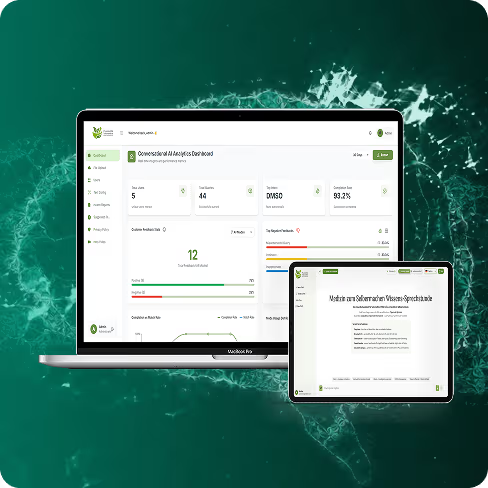
AI Automation
AI-Powered Content Automation Platform
An AI content engine that turns sales and strategy calls into ready-to-post content, matched to the brand's own voice and scheduled straight to LinkedIn.
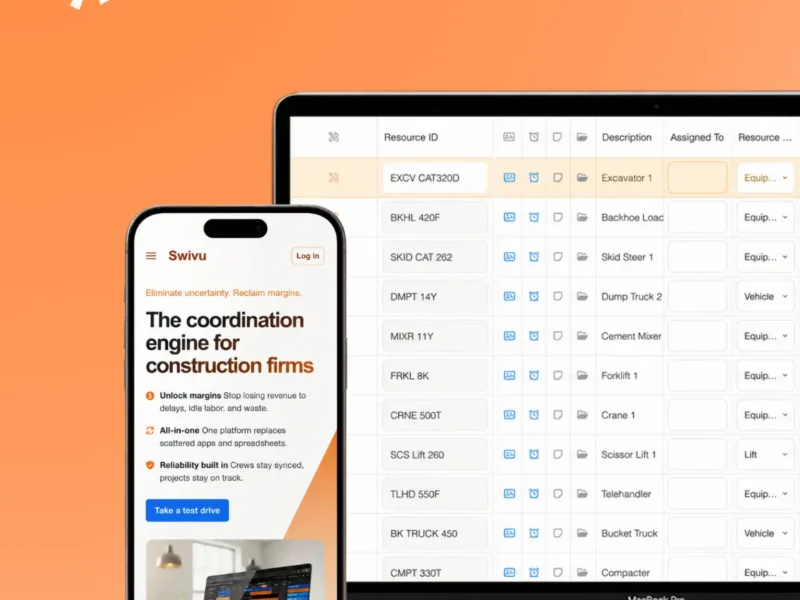
Construction Management
Real-Time Construction Coordination, From HQ to Field
A construction coordination platform for multi site work, replacing spreadsheets and scattered email with tasks, schedules and on site progress synced in real time.
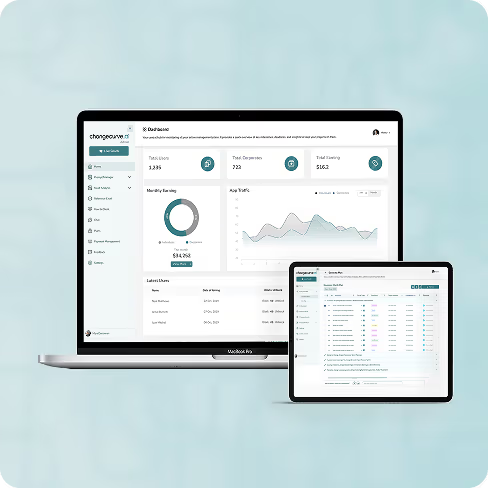
Change Management
AI-Powered Enterprise Change Management for Large-Scale Organizations
Enterprise change management software letting organisations execute, monitor and sustain change faster, with the progress of every initiative visible in one place.
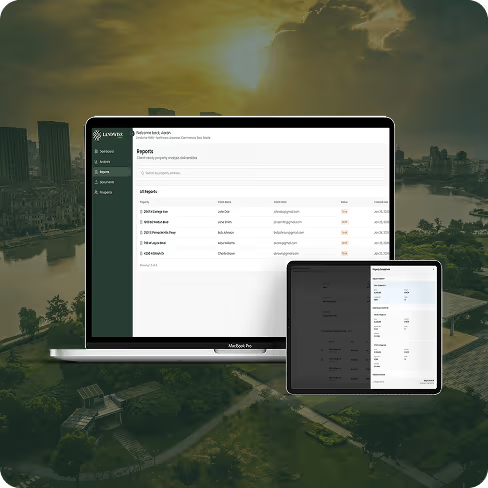
AI Based Real Estate Property
AI-Driven Property Insights Platform
Landwise NWA transforms commercial real estate workflows by providing AI-powered insights and data integration for faster decisions.
06 Process
Our Logistics AI Solutions Process
Our seven-step process takes logistics builds from roadmap and model design through TMS/WMS integration, historical testing, deployment, and ongoing monitoring.
Get Your Roadmap-
Network & Flow Discovery
We start with your lanes, your volumes, and where cost and service actually leak. Our team reviews the data you hold across TMS, WMS, and telematics, and agrees what is realistic to model. That prevents a project built on data quality nobody checked.
-
Optimisation Strategy & Roadmap
We translate priorities into a phased plan with measurable targets, timelines, and controls. The plan covers which decisions the model makes, which stay with a planner, and what the cost per shipment needs to be for it to be worth running.
-
Forecast & Routing Model Build
We build the pipelines and models, then evaluate against periods you have already run rather than a random split. Pass thresholds are agreed per lane group, and we iterate with weekly demos against real historic weeks including peak.
-
TMS, WMS & Telemetry Integration
We connect to your transport and warehouse systems, carrier feeds, and telematics through APIs and EDI, with a defined system of record and monitored reconciliation. Integrations are staged and reversible so live operations are never at risk.
-
Simulation & Exception Testing
We run the models against historic peak and against deliberately broken inputs to see how they fail. We validate latency and cost under load, confirm fallback behaviour when a feed stops, and document the results before anything touches dispatch.
-
Lane-by-Lane Rollout
We go live on a subset of lanes with monitoring, alerting, and a rollback path held open. Planners see performance against the agreed baseline, and their overrides are captured, before the next group is switched on.
-
Monitoring & Re-Tuning
We monitor drift, cost, and service performance after launch, and re-fit as your network and carrier mix change. You get documented systems and a named team that remembers why each modelling decision was made.
07 Tech Stack
The Logistics AI Solutions Stack We Use
Proven tools and frameworks, chosen because they hold up when the depot schedule slips.
- OpenAI
- Claude
- Gemini
- Llama 3
- Mistral
- Falcon
- LangChain
- LlamaIndex
- Haystack
- DSPy
- LoRA
- PEFT
- Axolotl
- Unsloth
- Pinecone
- Weaviate
- pgvector
- Qdrant
- Chroma
- OpenAI API
- Anthropic API
- Vertex AI
- Bedrock
- LangSmith
- Langfuse
- Arize
- Helicone
- Guardrails AI
- NeMo Guardrails
- Presidio
- Streamlit
- Chainlit
- Next.js
- Vercel AI SDK
08 FAQ
FAQs
Quick answers to common logistics AI solutions questions before you start your build
Logistics AI solutions forecast demand by lane, flag exceptions before a customer calls, and optimise routes and loads to cut empty miles. Models run against your own lane and carrier history, and forecasts are backtested on your shipments before a planner is asked to trust them.
In most cases yes. We work with the major transport and warehouse platforms through their APIs, and with EDI where that is how your partners exchange data. Your existing system stays the system of record, and integrations are staged so live operations are never dependent on an untested path.
We measure it on periods you have already run, including peak, and report the error where it costs money rather than as a single headline number. You see the accuracy on your own lanes before you commit to building anything on top of it.
Yes. We map EDI transaction sets and capture scanned documents such as bills of lading and proofs of delivery into your data model, with confidence scoring so only the doubtful ones reach a human. Partner-specific variations are handled as configuration rather than code changes.
We load test against your worst historical week before launch and agree latency and cost budgets as requirements up front. Fallback behaviour is defined for every dependency, so a carrier feed going quiet degrades the system rather than stopping dispatch.
09 Book a Call
Ready to Build with KoderTal's AI Experts?
Tell us what you are trying to automate or ship. We reply within one business day with a next step and the engineer who would run the work.
- 2451 West Grapevine Mills Circle, Grapevine, TX 76051 · USA
- hello@kodertal.com
- Reply within 1 business day, 24/7 support once live